With so many options on the market, it can be challenging to determine which SEO tool best fits your needs. In this comprehensive comparison, we'll be pitting two strong and popular SEO platforms against each other: Ahrefs and SpyFu.
This guide is perfect for SEO professionals, digital marketers, and small business owners who want to optimize their websites and outrank the competition.
We'll dive deep into the key features, pricing, ease of use, and ideal use cases for each tool. Plus, we'll introduce a game-changing new option from SpyFu that might just be the ultimate SEO solution you've been looking for.
Here's a preview of the aspects we'll be comparing:
- Key features and capabilities
- Ease of use and interface
- Pricing and value
- Ideal use cases
- Expert opinions and reviews
- Tips, tricks, and tutorials
Key Features and Capabilities of Ahrefs and SpyFu
Keyword Research
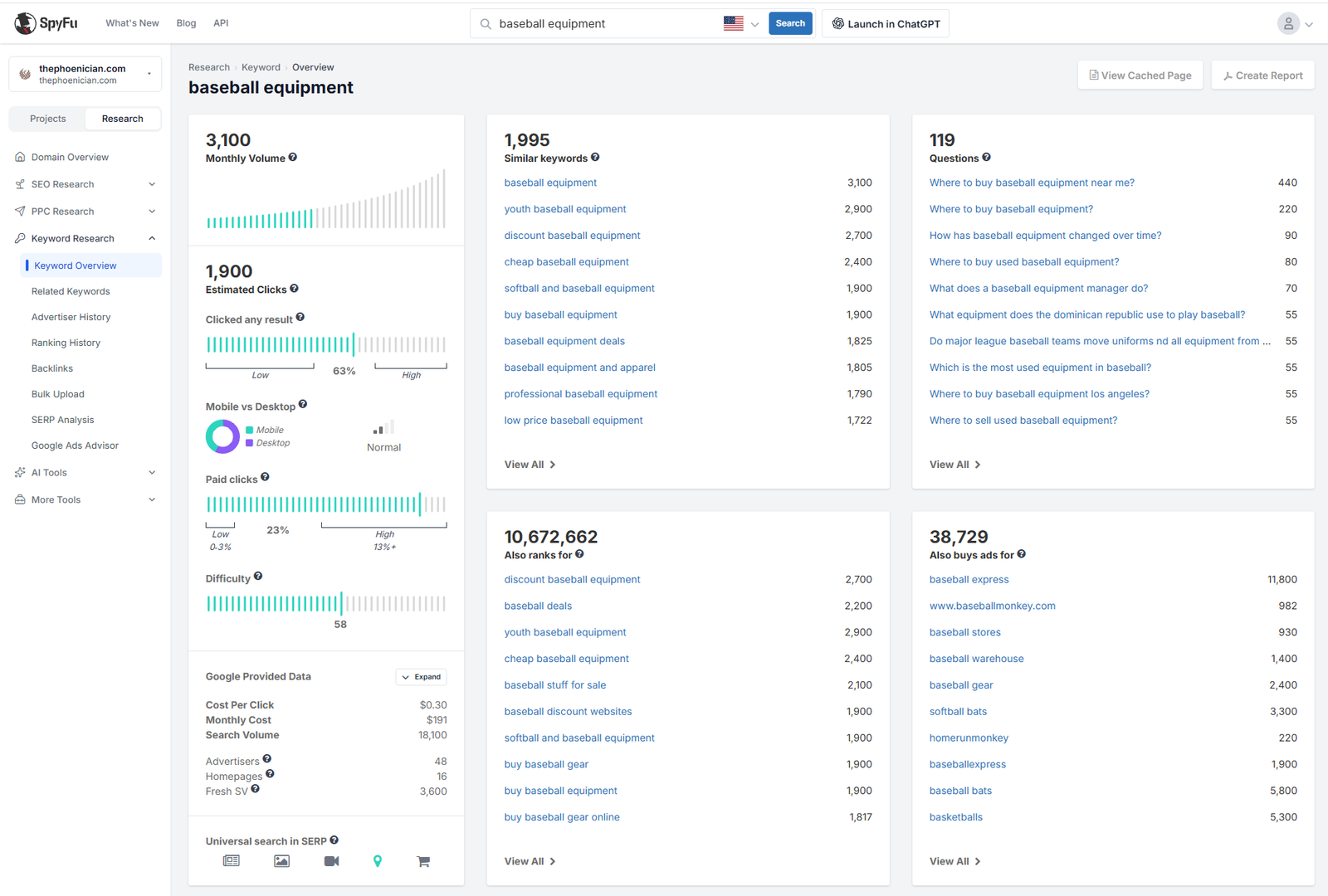

Both Ahrefs and SpyFu offer a suite of keyword research features, but there are some notable differences. Ahrefs offers an impressive keyword database of almost 29 billion keywords, but SpyFu boasts 73 billion results to share with 7.2 trillion results powering the site's answers.
As recently as February 2025, SpyFu shared tests that showed it surpassing both Ahrefs and Semrush in the number of keywords it searches. This is a massive jump making SpyFu, the once-smaller tool, a powerhouse in keyword research.
Across industries and website sizes, SpyFu offers 10x more PPC keywords and 2x more SEO keywords than Ahrefs (or Semrush).
In terms of keyword difficulty scores, Ahrefs factors in backlink profiles and no longer blends in "domain authority" scores that it did in the past. SpyFu's keyword difficulty score similarly provides a good indication of ranking potential.
For SERP analysis, both tools allow you to see top-ranking pages and analyze their metrics. However, Ahrefs goes a step further with its "Content Gap" feature, which identifies untapped keyword opportunities your competitors are ranking for but you aren't.
Overall, while both tools are powerful for keyword research, Ahrefs provides more proprietary metrics. However, SpyFu gives you far more keyword depth at a much lower price.
Winner: SpyFu
Backlink Analysis

Backlinks are a crucial ranking factor, and both Ahrefs and SpyFu provide comprehensive tools for analyzing them. Ahrefs is known for having the largest and most accurate backlink database in the industry, with an estimated 35 trillion links indexed. SpyFu's backlink database is smaller but still strong, with over 1 trillion links.
Both tools allow you to analyze the backlink profiles of your own site and your competitors, identifying opportunities for link building and spotting potentially harmful links. Ahrefs provides more advanced features like its "Link Intersect" tool, which finds websites that link to your competitors but not to you.
SpyFu's backlink analysis is more focused on identifying link building opportunities and tracking new and lost links over time. It also provides a useful "Backlink Builder" tool that helps you find relevant link prospects based on your niche.
While Ahrefs is the clear winner in terms of database size and advanced features, SpyFu's backlink tools are well-suited for link building workflows — tracking new and lost links, and surfacing prospects worth pursuing.
Winner: Ahrefs
Site Audit
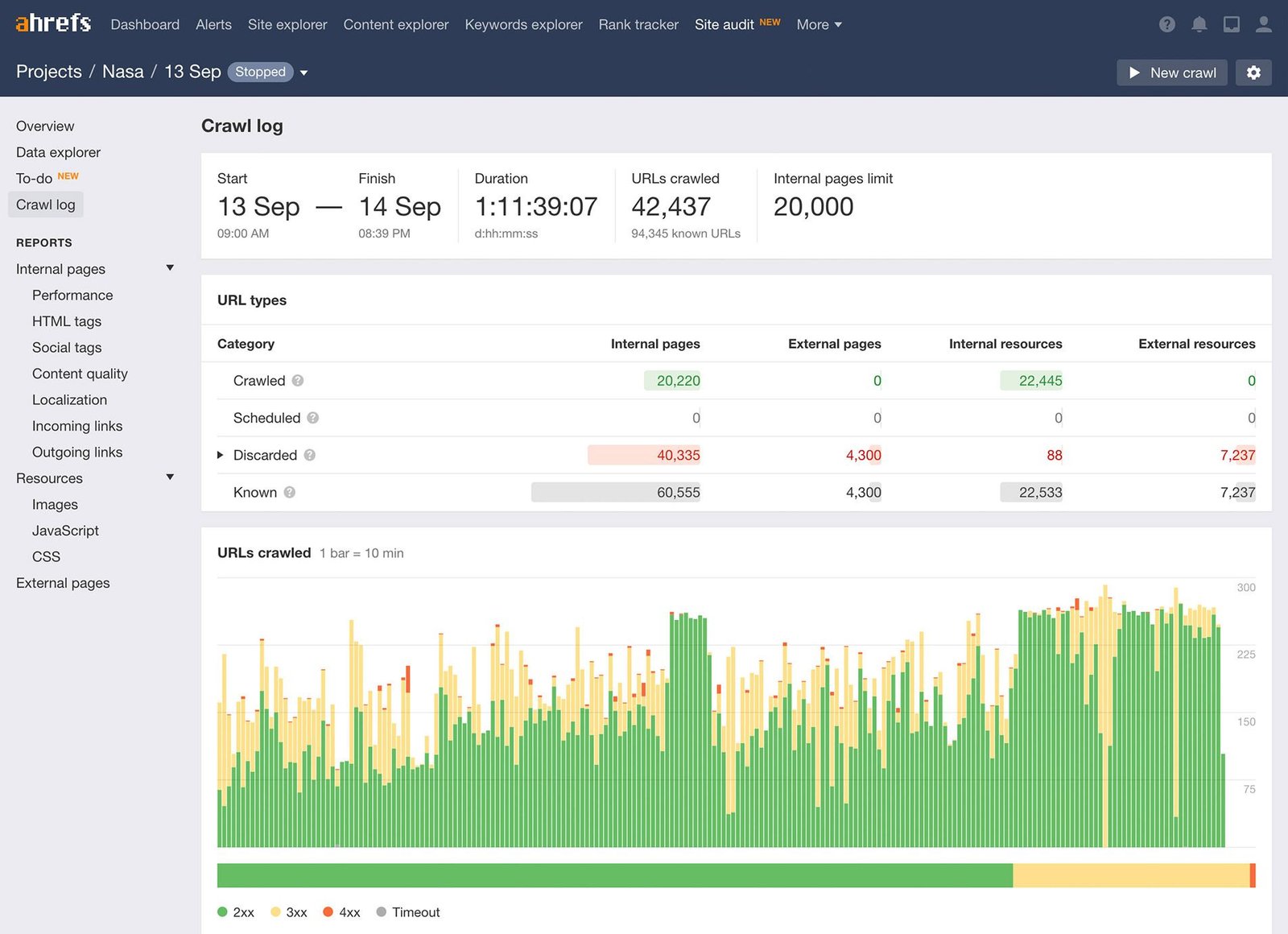
On-page SEO is just as important as off-page factors, and both Ahrefs and SpyFu offer site auditing capabilities — with some real differences in approach.
Ahrefs' Site Audit is a mature, comprehensive crawler that checks for a wide range of technical issues and explains them clearly. It integrates with the rest of the Ahrefs suite, so audit findings sit alongside keyword and backlink data in the same platform — useful for teams already living in Ahrefs day-to-day.
SpyFu's Site Audit is currently in development and coming soon. When it launches, it's built around a different idea: most teams don't struggle to find SEO issues — they struggle to move from a list of findings to actual fixes.
The planned workflow runs from Crawl → Analyze → Prioritize → Generate Recommendations → Implement Improvements. That blends in AI-powered recommendations for title tags, meta descriptions, headings, and alt text built directly into that flow (speeding up your updates and taking some work off your shoulders). Health scoring and severity classifications are designed to help teams know where to focus first, rather than leaving prioritization as a separate manual step.
For now, Ahrefs has the live, established product here. SpyFu's is on the way — and when it ships, this section is one to revisit.
Edge: Ahrefs (for now)
Competitor Research
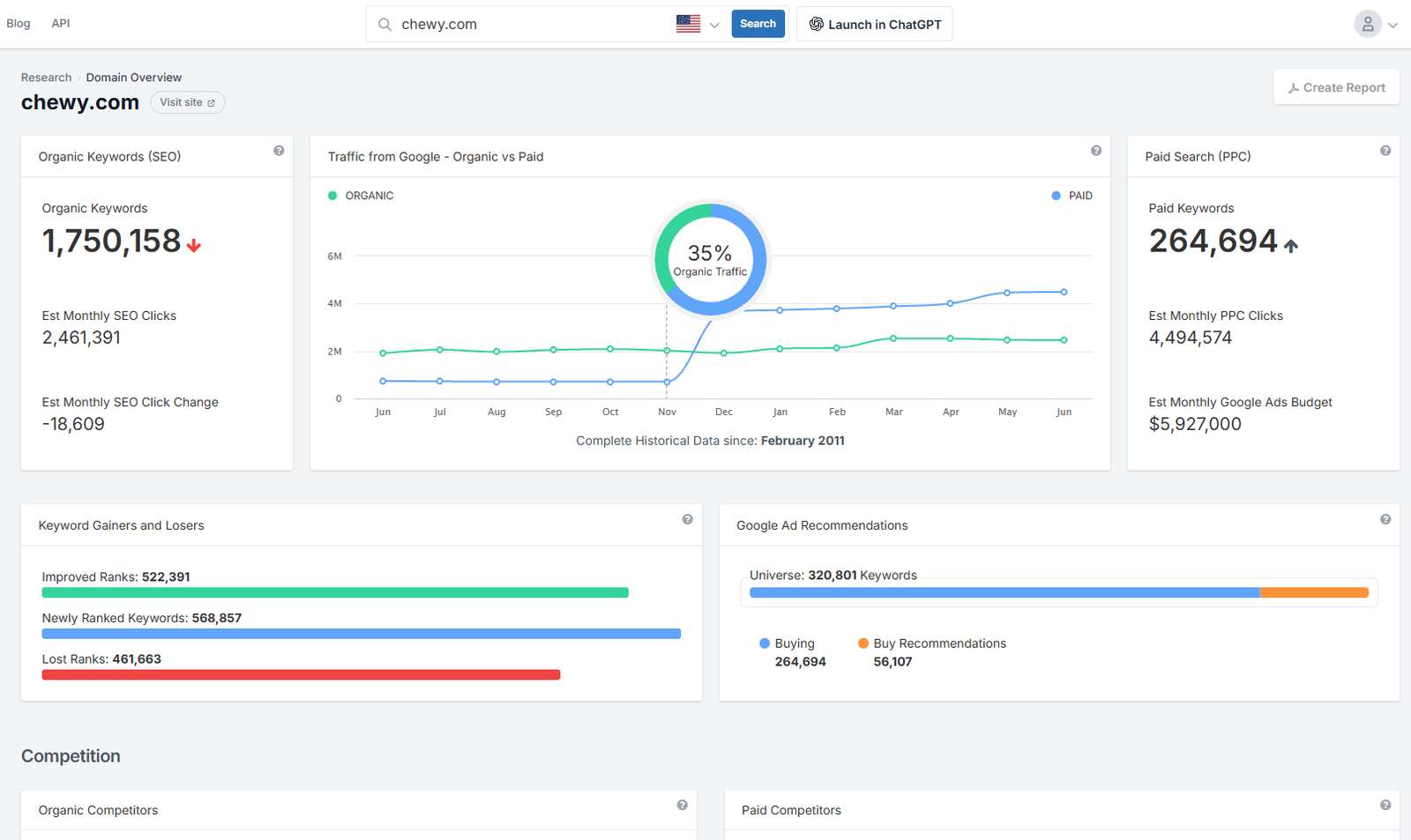
Competitor research is where SpyFu really shines. Its core feature set is built around analyzing your competitors' SEO and PPC strategies and using those insights to inform your own campaigns.
With SpyFu, you can see your competitors' top keywords, estimate their monthly SEO clicks and PPC budget, and even see their exact ad copy and landing pages. This level of competitive intelligence is unmatched by Ahrefs, which is more focused on backlink and keyword research.
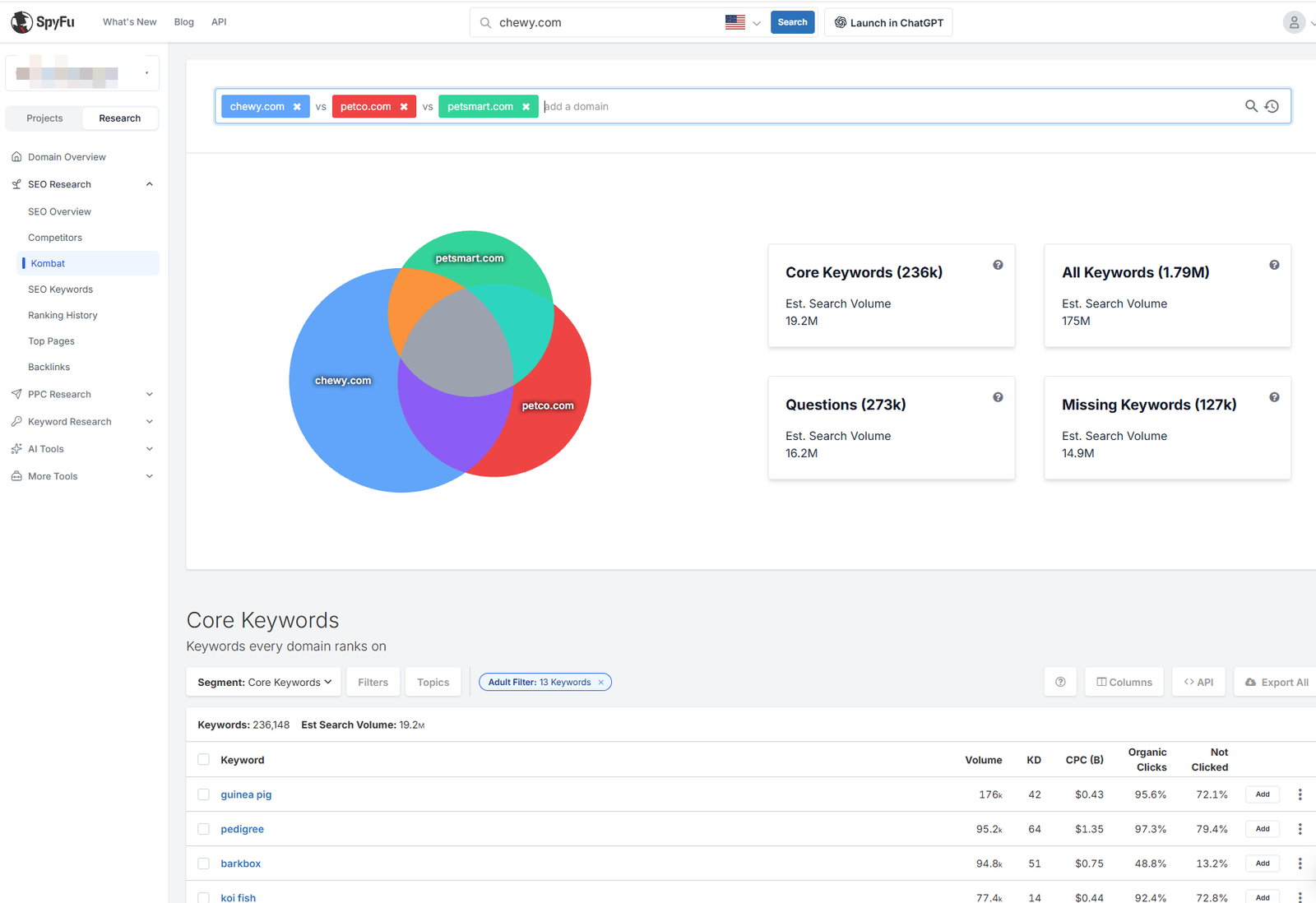
SpyFu also offers a unique "Kombat" feature, which allows you to compare multiple competitors and see where they overlap and differ in terms of keywords, content, and PPC strategies. This is incredibly useful for identifying content gaps and opportunities to differentiate yourself in the market.
The "compare to my site" feature inside SpyFu's SEO keywords tool is a sign of how SpyFu encourages competitive comparisons in a user's deep research.
While Ahrefs does provide some competitor research features, like its "Content Gap" and "Site Explorer" tools, it simply can't match the depth and breadth of SpyFu's competitive intelligence capabilities, especially with actionable next steps.
Winner: SpyFu
Rank Tracking
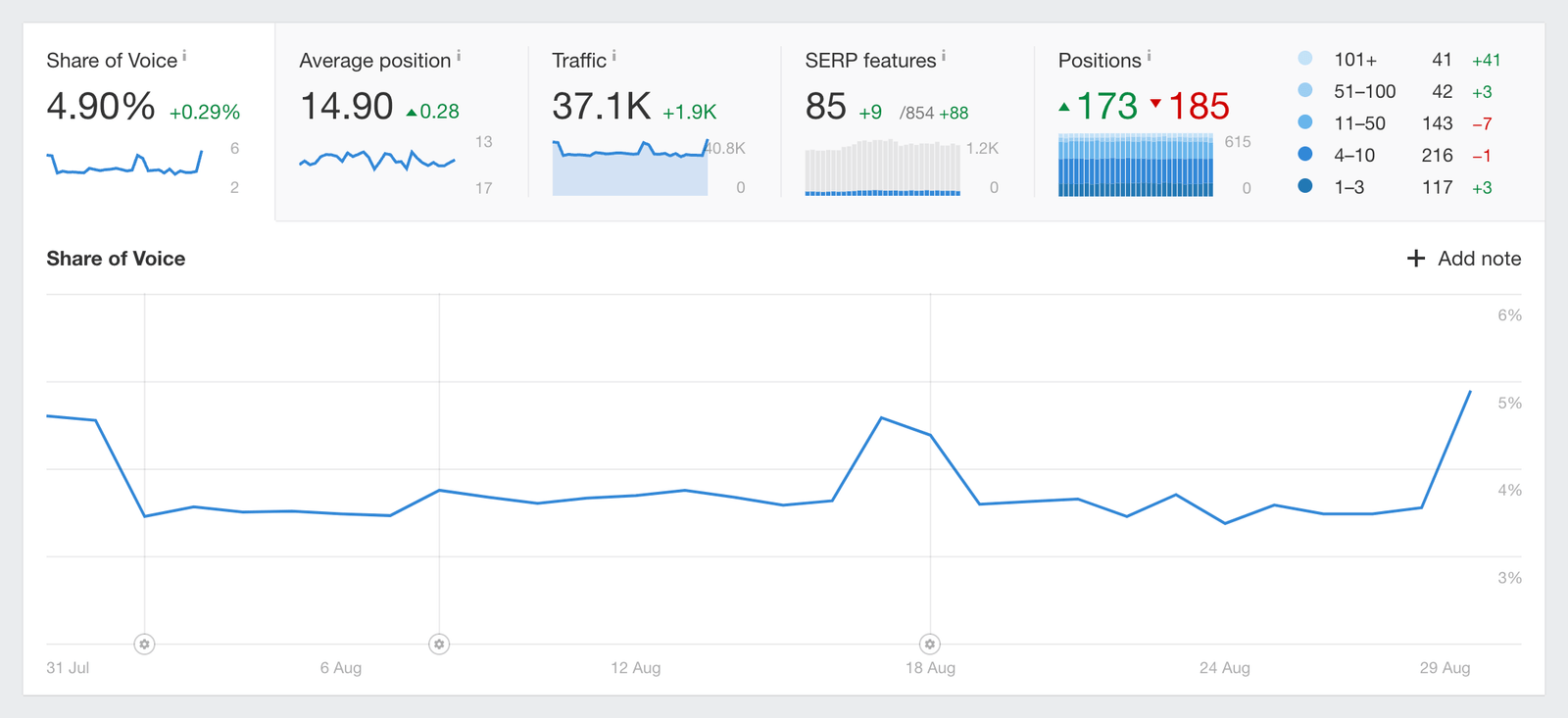
Tracking your keyword rankings over time is essential for measuring the success of your SEO efforts, and both Ahrefs and SpyFu offer rank tracking features. Ahrefs' rank tracker allows you to track up to 10,000 keywords across multiple devices and locations. Ahrefs tracking amounts are limited by workspace: 750 for Lite, Stardard at 2000, ad Advanced at 5000.
SpyFu's rank tracking covers full keyword breadth for "live site tracked" domains set up in a personal dashboard. There is no mobile or location-specific tracking outside of country-level rankings. Further, it offers some unique features like its "Ranking History" tool, which shows you how your rankings have changed over time for specific keywords.
Both tools provide useful reporting and visualization features, like graphs and charts showing your ranking progress over time. Ahrefs also offers the ability to set up automated email alerts for when your rankings change significantly.
This one comes at a draw. Ahrefs does well for larger websites and those targeting multiple geographic locations. However, SpyFu allows easier access to track more keywords without having to sign up for more expensive plans.
Draw: Ahrefs for device-level tracking, SpyFu for access
Ease of Use and Interface
When it comes to ease of use and interface design, SpyFu has a clear advantage over Ahrefs. SpyFu's platform is incredibly intuitive and user-friendly, with a clean and modern design that makes it easy to navigate and find the information you need.
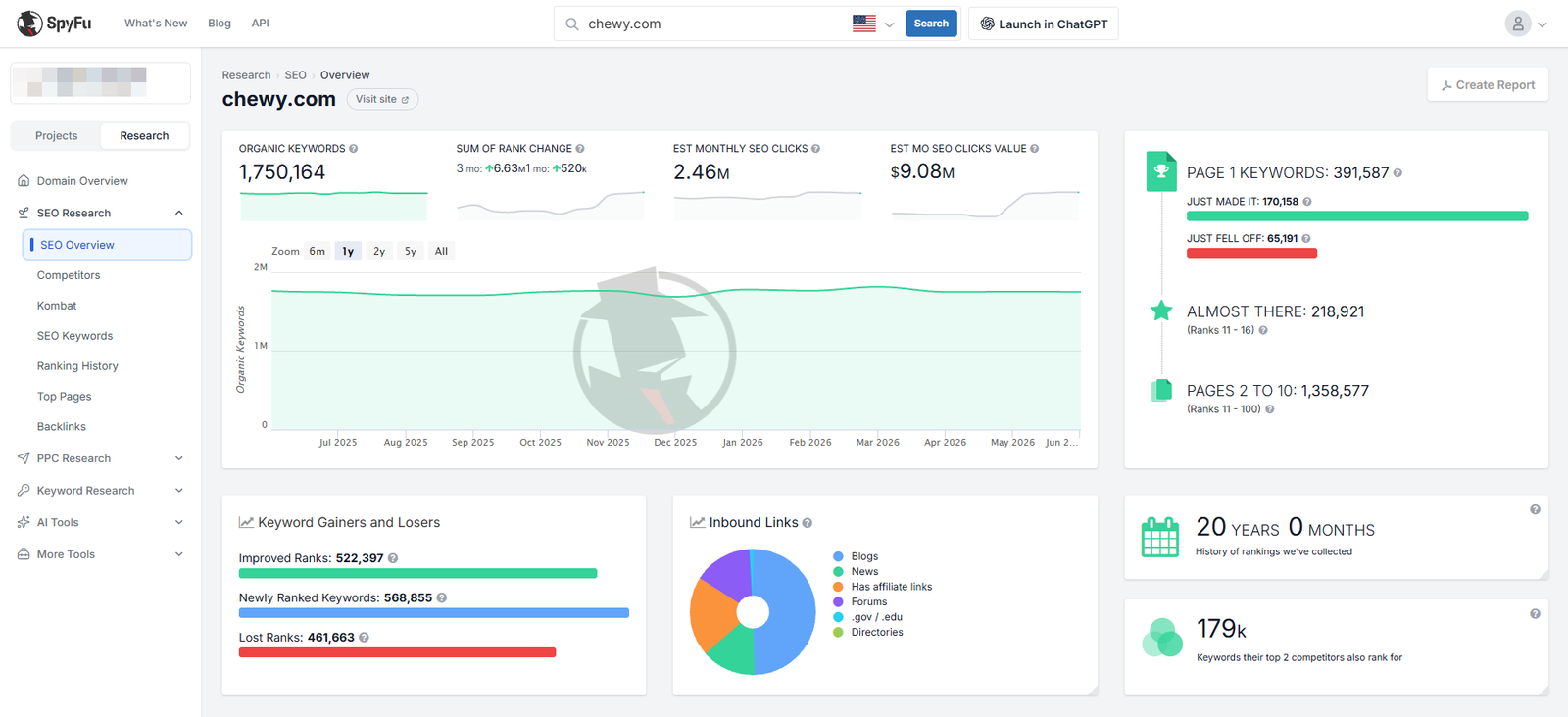
Even complete beginners can quickly get up to speed with SpyFu's features and start generating insights right away. The platform provides helpful tutorials and guides throughout, and the reporting dashboards are visually appealing and easy to understand. The overviews (SEO Overview, PPC Overview, Keyword Overview) give a top-level summary of the other features that are available in SpyFu, and the user can click through to go deeper into each one.
Ahrefs, on the other hand, has a steeper learning curve due to its more advanced features and complex navigation. While it does offer extensive documentation and support, it can still be overwhelming for those new to SEO.
Ahrefs' interface provides a wealth of data and insights, but with broad tools, it can be challenging to find the specific information you're looking for and interpret the results.
Overall, SpyFu is the winner when it comes to ease of use and interface design. Its user-friendly platform and intuitive navigation make it accessible to SEO professionals of all skill levels.
Winner: SpyFu
Pricing and Value
When it comes to pricing, SpyFu is the more affordable option compared to Ahrefs. SpyFu offers three pricing plans:
- Basic: $39/month
- Pro + AI Bundle (with RivalFlow AI): $119/month, $59 the first month
- Team/Agency Bundle (with RivalFlow AI): $249/month
All plans come with unlimited search results, data exports, and on-page easy-to-build PDFs. The Pro and Team plans also include API access and custom-branded reporting.
Ahrefs, on the other hand, costs more at every comparable tier. Ahrefs now offers a limited $29/month Starter plan with no rank tracking. The entry point for full Site Audit and rank tracking access is the Lite plan at $129/month, followed by Standard at $249/month and Advanced at $449/month. Enterprise pricing is custom.
While Ahrefs does offer advanced features and metrics, its standard cost may be prohibitive for smaller businesses and solo practitioners.
One area where SpyFu really shines is its generous usage limits. Even on the Basic plan, you get unlimited search results, unlimited data exports of 10,000 rows at a time, and tracked keywords. Ahrefs' entry-level plan, by comparison, only includes 500 tracked keywords and 175 domain reports per week.
SpyFu also offers a 30-day money-back guarantee on all plans, so you can try the tool risk-free. Plus, a no-questions-asked cancelation policy shows that SpyFu takes a customer-friendly stance. Ahrefs explicitly says it is not obligated to refund your money.
Overall, SpyFu provides better value for the money, especially for small to medium-sized businesses and solo practitioners. Its affordable pricing and generous usage limits make it accessible to a wider range of users.
Winner: SpyFu
Ideal Use Cases for Ahrefs vs SpyFu
Ahrefs Ideal Use Cases
- Large enterprises and agencies that need the most comprehensive SEO data and features
- Businesses heavily focused on link building and improving their backlink profile
- SEO professionals who rely on visual reports and dashboards to communicate with clients and stakeholders
SpyFu Ideal Use Cases
- Small to medium-sized businesses with tighter budgets
- Marketers primarily focused on competitor research for both SEO and PPC
- Teams that need unlimited search and export capabilities to inform their strategy and content creation
Tips, Tricks and Tutorials
To help you get the most out of Ahrefs and SpyFu, here are some tips and tutorials:
Ahrefs Tips and Tricks
- Use the "Content Gap" feature to find untapped keyword opportunities your competitors are ranking for but you aren't.
- Set up email alerts for your most important keywords so you can stay on top of ranking changes.
- Use the "Link Intersect" tool to find websites that link to your competitors but not to you - these are prime link building opportunities.
SpyFu Tips and Tricks
- Use the "Kombat" feature to compare multiple competitors to identify content gaps and keyword opportunities.
- Take advantage of SpyFu's unlimited search results and data exports to build your content strategy and editorial calendar.
- Use SpyFu's PPC research tools to research your competitors' ad copy and their dominant messaging for inspiration and ideas. Ad History specifically shows your competitors' evolution of ads.
RivalFlow AI by SpyFu--A Competitor-Focused Content Optimization Tool
If you really want to elevate your SEO workflow, you need to check out RivalFlow AI, SpyFu's AI-powered content optimization tool.
RivalFlow AI uses advanced machine learning algorithms to analyze your website's content and compare it to your higher-ranking competitors. It then provides specific, actionable recommendations for how to improve your content to outrank your rivals.
With RivalFlow AI, you can:
- Identify topics in an article that your competitors are targeting but you aren't
- Optimize your existing content to be more comprehensive and in-depth than your competitors'
- Expand your existing pages so that they are more thorough and robust, extending your authoritativeness and trustworthiness
Because they were created by the same team, RivalFlow AI works well with SpyFu's existing suite of SEO and PPC research tools, giving you a powerful end-to-end solution for dominating the search results.
Conclusion
After an in-depth analysis of Ahrefs and SpyFu's features, pricing, and ideal use cases, it's clear that both tools have their strengths and weaknesses. Ahrefs brings a broad, mature feature set and a massive database. However, its high price point and complexity may be overkill for smaller businesses and solo practitioners.
SpyFu, on the other hand, offers unbeatable value for the money, with affordable pricing, generous usage limits, and a user-friendly interface that's accessible to SEO professionals of all skill levels. Its competitor research and PPC analysis features are particularly strong, making it an excellent choice for marketers looking to gain a competitive edge.
Ultimately, the best tool for you will depend on your specific needs, budget, and level of SEO expertise. If you're a large enterprise or agency with complex SEO needs and a big budget, Ahrefs may be the way to go. But if you're a small to medium-sized business or solo practitioner looking for an affordable, easy-to-use tool with powerful competitor research capabilities, SpyFu is hard to beat.
And as SpyFu's own Site Audit tool moves toward launch, that gap on the technical auditing side is one worth watching closely.
And with the addition of RivalFlow AI, SpyFu has solidified its position as the ultimate SEO tool for content optimization. It's budget-friendly pricing makes it an easy choice.
